Most small business websites in Australia cost $2,000 to $10,000 to build with a local web studio, going by the prices Australian studios publish. A DIY builder costs little in cash but a lot in your time. Whichever you pick, budget for the domain, hosting and upkeep every year after the build.
The build price is the number everyone quotes. The better number for your budget is what the site costs over three years, and whether it brings in enough work to cover that. This guide covers both.
How much does a website cost in Australia?
A typical Australian small business site costs $2,000 to $10,000 to build. A simple template site can be under $2,000, and an online store or custom system costs a lot more.
These ranges come from prices Australian web studios published in 2025 and 2026. Most quote plus GST or don't say, so check. They are a starting point, not a quote.
| Type of site | Typical build cost | Good for |
|---|---|---|
| DIY website builder | $0 to several hundred dollars a year in plan fees | Trying an idea, a very tight budget |
| Template site set up for you | $1,000 to $5,000 | A few pages, a standard layout |
| Custom small business site | $3,000 to $15,000 | Tradies, services, local businesses |
| Online store | $5,000 to $30,000 | Selling products online |
| Custom web app or booking system | $20,000 and up | Logins, quoting tools, integrations |
What makes one website cost more than another?
Mostly the number of pages, how custom the design is, and who writes the words. Features such as bookings or a shop add the most.
- Pages. A one page site and a 15 page site with a page for each service and suburb are different jobs.
- Template or custom design. A template is quick to set up, but other businesses use the same one. A custom design is built around your business and the one thing a visitor should do next.
- Content. If you supply the words and photos, the price drops. Copywriting is often the hidden extra.
- Features. Booking forms, payments, a shop or links to your job software all add time.
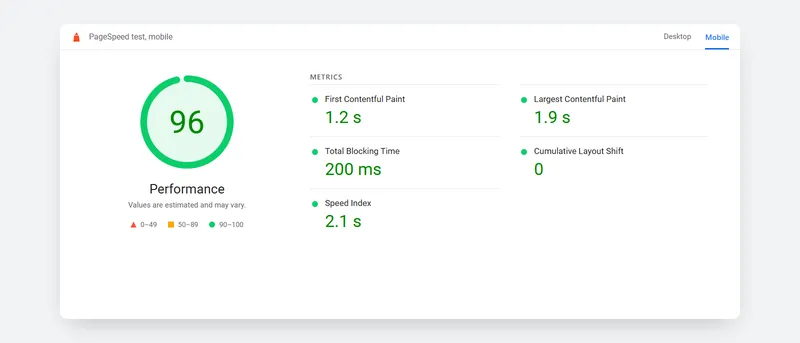
- Phones and speed. Google uses the mobile version of your site for indexing and ranking, so a site built for phones first is worth paying for. In a speed test of 50 Australian small business websites, 34 took more than 4 seconds to show their main content on a phone.
- Tracking. Setting up phone click and form tracking takes an hour or two, and it is how you find out if the site works.
What does a website cost to run each year?
Plan for a domain, hosting, and someone to keep the site working. Some of these are small, but they repeat every year.
- Domain name. You register a .com.au through an accredited registrar or reseller, and each provider sets its own price, so compare a few.
- Hosting. A small, fast site can cost very little to host. business.gov.au notes that a self-hosted site means paying for hosting and sometimes extra plug-ins.
- Care and updates. Security updates, backups, fixing broken forms and small changes. Many builders sell this as a monthly plan.
- Email and licences. Business email, paid plugins and themes renew every year.
What does a website really cost over three years?
Add the build to three years of running costs. For many small businesses the running costs come to a third or more of the total.
Here is an illustration with made-up numbers for a five page site. It is an example, not a quote.
| Year 1 | Year 2 | Year 3 | |
|---|---|---|---|
| Build | $5,000 | none | none |
| Domain | $30 | $30 | $30 |
| Hosting and care | $2,400 | $2,400 | $2,400 |
| Total | $7,430 | $2,430 | $2,430 |
over three years, or about $341 a month. Compare quotes on this total, not the build price alone.

A DIY builder looks cheaper in cash. Price your own hours at what a job pays you, then add them in. The first build often takes a weekend or three, and updates keep coming.
Who should own your .com.au domain?
Your business should, under your own ABN. A .com.au licence is tied to the business that registered it, so a builder who registers it under their ABN holds your domain.
auDA, which runs .au names, says the usual way to qualify for a .com.au is an active ABN or ACN. If that ABN is cancelled, the holder is no longer eligible to keep the name. Two things follow:
- Ask for the .com.au to be registered in your business's name and ABN, with the builder given access.
- If you change structure, say from sole trader to a company, move the licence to the new entity before the old ABN is cancelled.
The same goes for your Google accounts. You should own them, with the builder added as a user.
How do you know if the website is worth the money?
Track what it brings in. Set up phone click and form tracking, then compare the enquiries and jobs to the monthly cost.
In Google Analytics, you mark the actions that matter, such as a form sent or a phone number tapped, as key events. Then you can see how many came from the site each month, and from where.
Using the example above: if the site brings in one extra job a month worth $1,000, it pays for its $341 a month nearly three times over. If it brings in nothing you can trace, you know to change it.
I set up every site I build this way, so each enquiry arrives with where it came from. Marketing for tradies has a simple enquiry sheet to go with it.
How do you compare website quotes?
Put the quotes side by side and check they cover the same things. The cheapest quote often leaves out words, tracking, GST or who owns what.
Ask each builder:
- How many pages, and who writes the words?
- Is the price plus GST or including it?
- Is it built for phones first, and is phone click and form tracking included?
- Is the .com.au registered under my ABN, and do I own the site files and Google accounts?
- What does hosting and care cost after year one?
- What do changes cost later, and what happens if I leave?
Not sure which kind of site suits you? Who I work with shows what each type of business usually needs first.
For a quote that spells out all six answers, see how I build websites or tell me about your business.

I run Obie Digital on my own, building websites and running SEO and Google Ads for small businesses in Australia and New Zealand. I grew up in Invercargill, studied Marketing Management at the University of Otago and have 9+ years in digital marketing.
More about how I work